メニュー
JP | JPY
-
-
- Challenges and Chances: A Review of the 1st Stem Cell Community Day
- Summertime, and the Livin’ Is Easy…
- Follow-on-Biologics – More than Simple Generics
- Bacteria Versus Body Cells: A 1:1 Tie
- Behind the Crime Scene: How Biological Traces Can Help to Convict Offenders
- Every 3 Seconds Someone in the World Is Affected by Alzheimer's
- HIV – It’s Still Not Under Control…
- How Many Will Be Convicted This Time?
- Malaria – the Battle is Not Lost
- Physicians on Standby: The Annual Flu Season Can Be Serious
- At the Forefront in Fighting Cancer
- Molecular Motors: Think Small and yet Smaller Again…
- Liquid Biopsy: Novel Methods May Ease Cancer Detection and Therapy
- They Are Invisible, Sneaky and Disgusting – But Today It’s Their Special Day!
- How Many Cells Are in Your Body? Probably More Than You Think!
- What You Need to Know about Antibiotic Resistance – Findings, Facts and Good Intentions
- Why Do Old Men Have Big Ears?
- The Condemned Live Longer: A Potential Paradigm Shift in Genetics
- From Research to Commerce
- Chronobiology – How the Cold Seasons Influence Our Biorhythms
- Taskforce Microbots: Targeted Treatment from Inside the Body
- Eyes on Cancer Therapy
-
-
-

-
-
- Challenges and Chances: A Review of the 1st Stem Cell Community Day
- Summertime, and the Livin’ Is Easy…
- Follow-on-Biologics – More than Simple Generics
- Bacteria Versus Body Cells: A 1:1 Tie
- Behind the Crime Scene: How Biological Traces Can Help to Convict Offenders
- Every 3 Seconds Someone in the World Is Affected by Alzheimer's
- HIV – It’s Still Not Under Control…
- How Many Will Be Convicted This Time?
- Malaria – the Battle is Not Lost
- Physicians on Standby: The Annual Flu Season Can Be Serious
- At the Forefront in Fighting Cancer
- Molecular Motors: Think Small and yet Smaller Again…
- Liquid Biopsy: Novel Methods May Ease Cancer Detection and Therapy
- They Are Invisible, Sneaky and Disgusting – But Today It’s Their Special Day!
- How Many Cells Are in Your Body? Probably More Than You Think!
- What You Need to Know about Antibiotic Resistance – Findings, Facts and Good Intentions
- Why Do Old Men Have Big Ears?
- The Condemned Live Longer: A Potential Paradigm Shift in Genetics
- From Research to Commerce
- Chronobiology – How the Cold Seasons Influence Our Biorhythms
- Taskforce Microbots: Targeted Treatment from Inside the Body
- Eyes on Cancer Therapy
-
-
-
JP | JPY
Sorry, we couldn't find anything on our website containing your search term.
Climate History: Cold Hard Proof
生命科学の探究
- 実験室の日常
- Off the Bench
- 心を動かすサイエンス
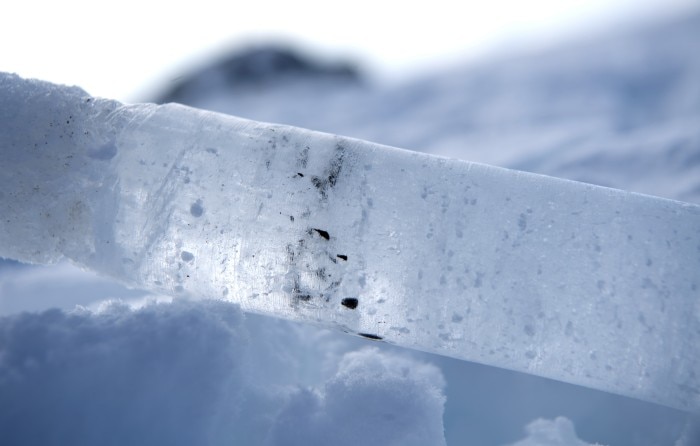
A continuous, 2.8 kilometer-long ice core provides insight into climate data spanning the past 1.2 million years.
An international team of researchers, in collaboration with the Alfred Wegener Institute (AWI), has recovered a continuous Antarctic ice core which bears information on the climate, dating back 1.2 million years. This discovery is considered a historic milestone in climate research. The longest continuous ice core previously to date was recovered in 2004, also in Antarctica, and dated back approximately 800,000 years. The scientists from the project “Beyond EPICA – Oldest Ice”, funded by the European Commission, are hoping that this new ice core will provide them with insights into the climate dynamics of the middle Pleistocene – a geological period during which ice-age cycles slowed from 41,000 years to 100,000 years. To this day, this phenomenon is considered to be one of the major riddles of climate science
According to a statement by the AWI, understanding the frequency of ice-age cycles is not only important for the past history of the planet, and humanity, but also for our future. This ice core, together with additional ice cores, was transported to Europe by ship, at great expense. In early summer, intensive research will commence in the ice laboratory of the AWI in Bremerhaven.
According to a statement by the AWI, understanding the frequency of ice-age cycles is not only important for the past history of the planet, and humanity, but also for our future. This ice core, together with additional ice cores, was transported to Europe by ship, at great expense. In early summer, intensive research will commence in the ice laboratory of the AWI in Bremerhaven.
もっと読む